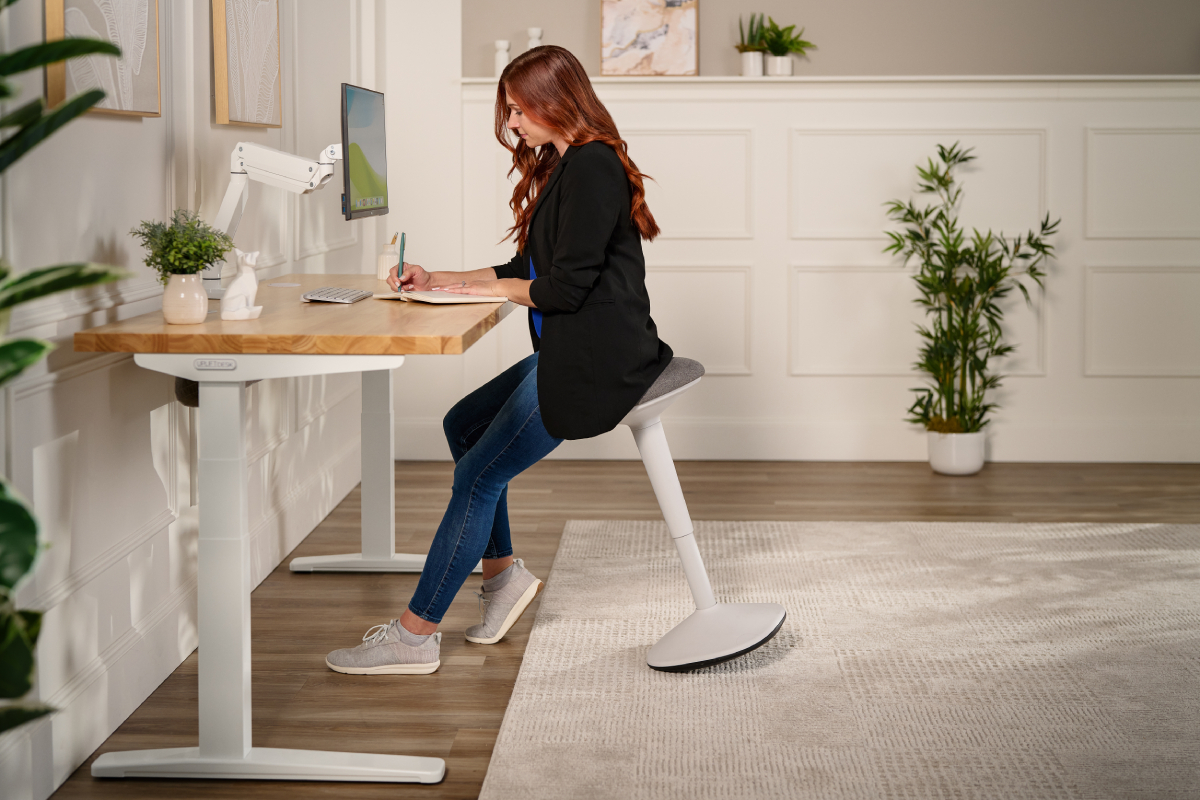
How to Choose an Ergonomic Stool for Your Standing Desk
An ergonomic stool adds a third position to a standing desk setup, somewhere between sitting and standing. Perching on a stool takes pressure off your legs and feet during long stretches on your feet. Many stool designs also invite small shifts in posture throughout the day. Most stools have little or no back support, so they work best in short sessions alongside a supportive office chair.
Why add a stool to a sit-stand setup
A standing desk makes movement part of the workday, and a stool gives that routine more range.
- A middle position. Perching keeps you upright and engaged while giving your legs a rest between standing sessions.
- More movement. Stools with tilting or rocking bases move with you, encouraging small adjustments instead of locking you into one posture.
- Easy to move. Most stools are lightweight enough to carry between a desk, a collaborative table, and a home office.
- A small footprint. A stool tucks under a desk or into a corner when you aren't using it.
Types of ergonomic stools
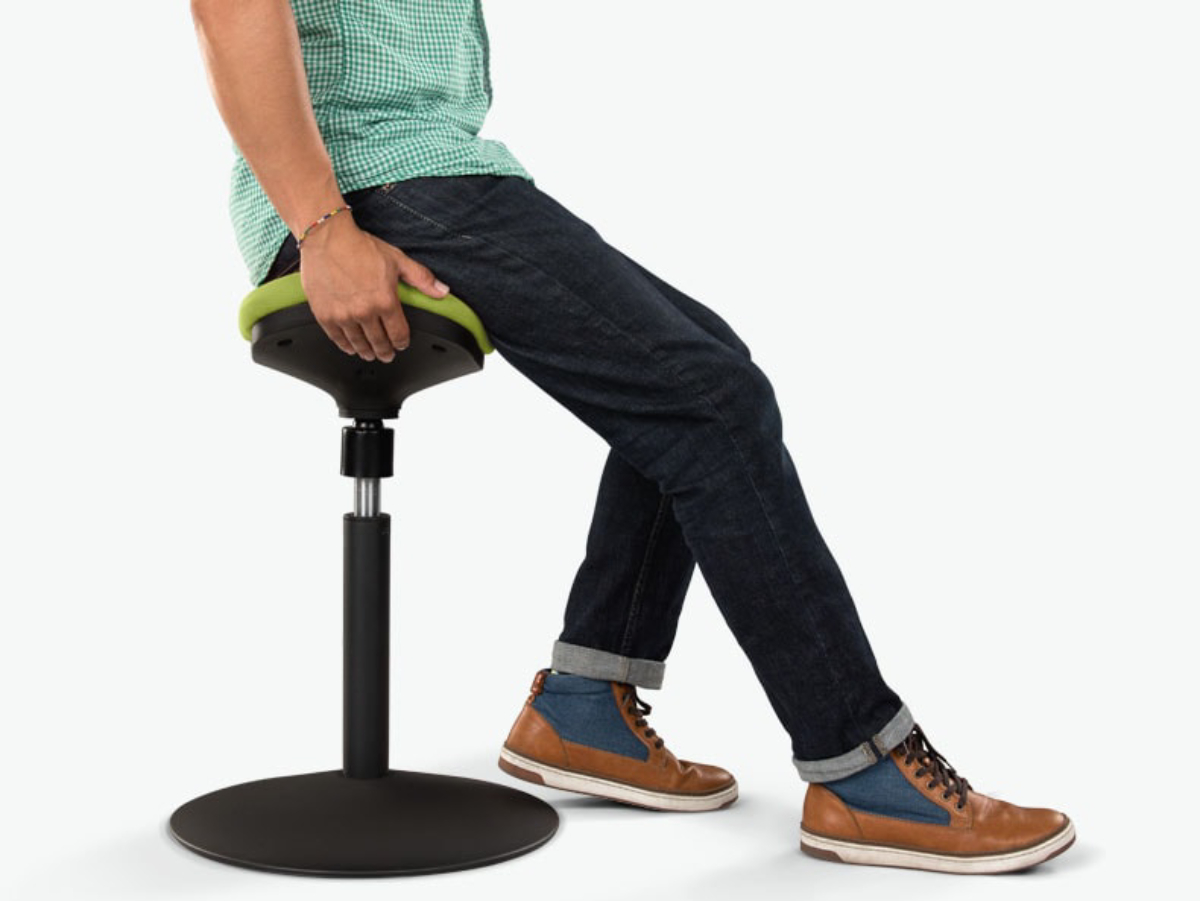
Active stools have rounded or weighted bases that tilt and rock as you shift your weight. They suit anyone who likes to stay in motion while they work. The Engage Stool sits on a convex base that rocks and pivots in any direction, with a lip at the edge that limits how far it leans. Its seat adjusts from 21.8 to 31.4 inches, covering both sitting and perching heights.
Saddle stools have a seat shaped like a riding saddle. The shape opens the angle between your hips and thighs and tilts the pelvis slightly forward, which supports a more upright spine. The Crescent Saddle Stool uses this design.
Kneeling chairs spread your weight between the seat and padded shin rests, which also opens the hip angle. The Ergonomic Kneeling Chair is a good fit for focused work in shorter blocks.
Drafting chairs sit taller than standard office chairs and add a foot ring for support at counter or standing-desk heights. The Clarksville Ergonomic Drafting Chair and the Capisco Chair from HÅG bring stool-style perching and chair-style support together in one seat.
What to look for in an ergonomic stool
- Height range. Check that the stool reaches a comfortable perching height. A height-adjustable desk can meet the stool wherever you set it, so the stool's range sets your options.
- Seat shape. Flat, saddle, and contoured seats each distribute weight differently. Pick the shape that matches how you like to sit or perch.
- Base and stability. Weighted and rounded bases encourage movement, while wide or wheeled bases keep the stool steady.
- Upholstery. Breathable fabric stays comfortable through the day, and stain-resistant materials keep cleanup simple.
- Portability. A lighter frame or a built-in handle makes it easier to move the stool between workspaces.
How to use a stool at a standing desk
- Set the stool first. Adjust the seat so your hips sit slightly higher than your knees, with both feet grounded.
- Bring the desk to you. Raise or lower the desk until your elbows rest at about 90 degrees and your forearms run parallel to the desktop.
- Save the height. Store your perching height as a memory preset on your desk keypad so you can switch to it with one touch.
- Rotate positions. Move between standing, perching, and sitting throughout the day, and return to your office chair for longer focused sessions.
Find the right stool for your workspace
Ergonomic stools come in active, saddle, kneeling, and drafting designs, so there's a fit for nearly every way of working. Browse the full collection of ergonomic stools to compare styles, colors, and height ranges.
Work better. Live healthier.