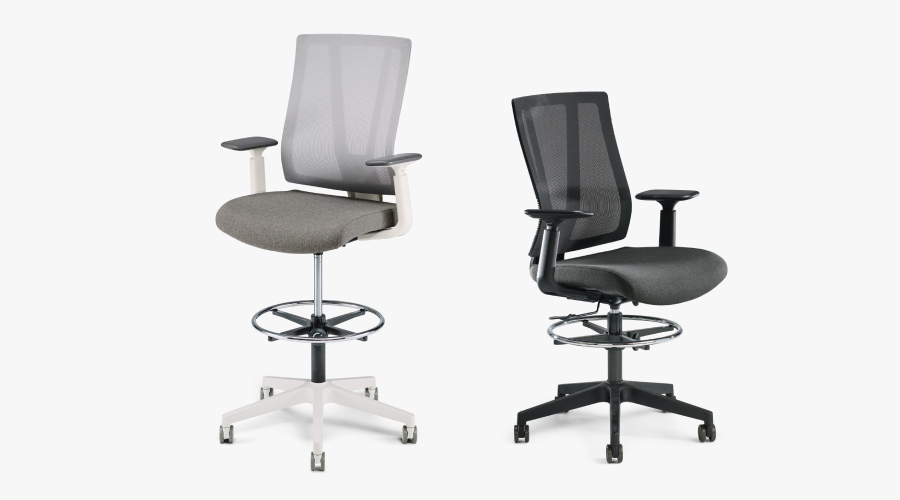
What Is a Drafting Chair? Uses, Features, and Who It's For
A drafting chair is a tall, height-adjustable chair with a built-in foot ring, designed for elevated work surfaces like standing desks, drafting tables, and lab benches. Originally made for architects and drafters, this specialized seating solution uses a longer pneumatic cylinder to raise the seat well above a standard office chair, so it aligns with the work surface.
Benefits of an ergonomic drafting chair
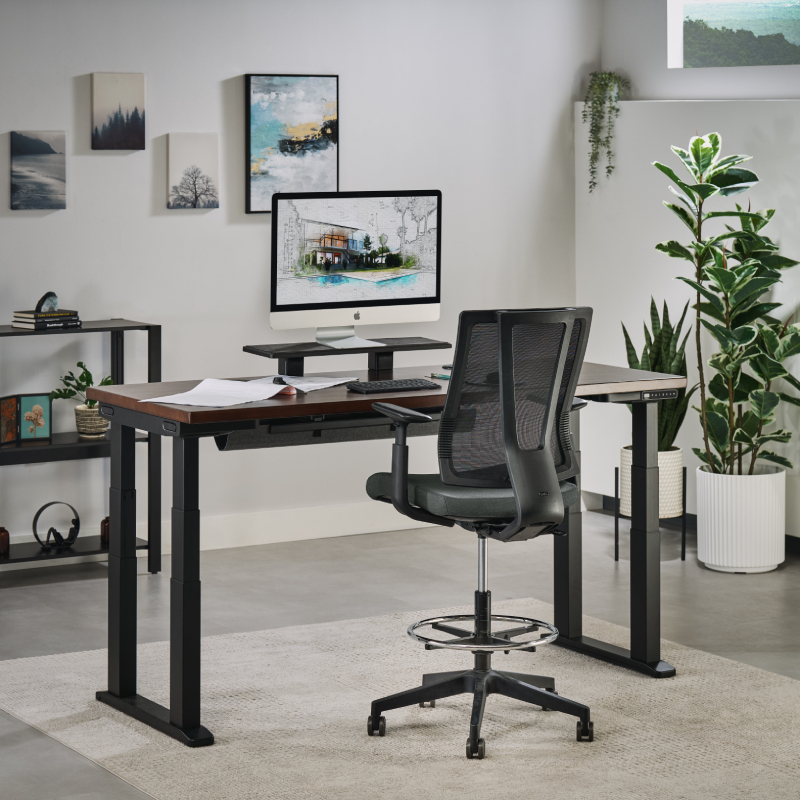
All drafting chairs serve a common purpose: allowing users with standing desks, fixed or otherwise, to seamlessly transition between standing and perching. As such, these chairs adjust to taller seat heights and feature an integrated foot ring. The seat's lowest setting starts near where a regular office chair tops out (around 22"), so users running standing-height desk setups can perch with ease. In other words, drafting chairs bring seated support up to the height where the work happens.
A built-in foot ring constitutes the other non-negotiable feature for drafting chairs. Taller chairs prevent your feet from reaching the floor, so seats lacking a dedicated place to rest your feet result in your legs dangling midair. This raises ergonomic concerns, given that dangling your legs during long periods of sitting weakens posture and hinders blood circulation. In addition to stabilizing the user's posture at higher seating positions, the foot ring primarily relieves pressure from the thighs. Specially designed chairs in this category take ergonomic solutions a few steps further.
Ergonomic drafting chairs boast the same premium features as their standard counterparts, including lumbar support and adjustable armrests. A built-in lumbar system, for example, reduces back strain and nudges users toward a neutral sitting posture by supporting the lower back. UPLIFT Desk has a chair that embodies all of the above.
Introducing the Clarksville Drafting Chair from UPLIFT Desk
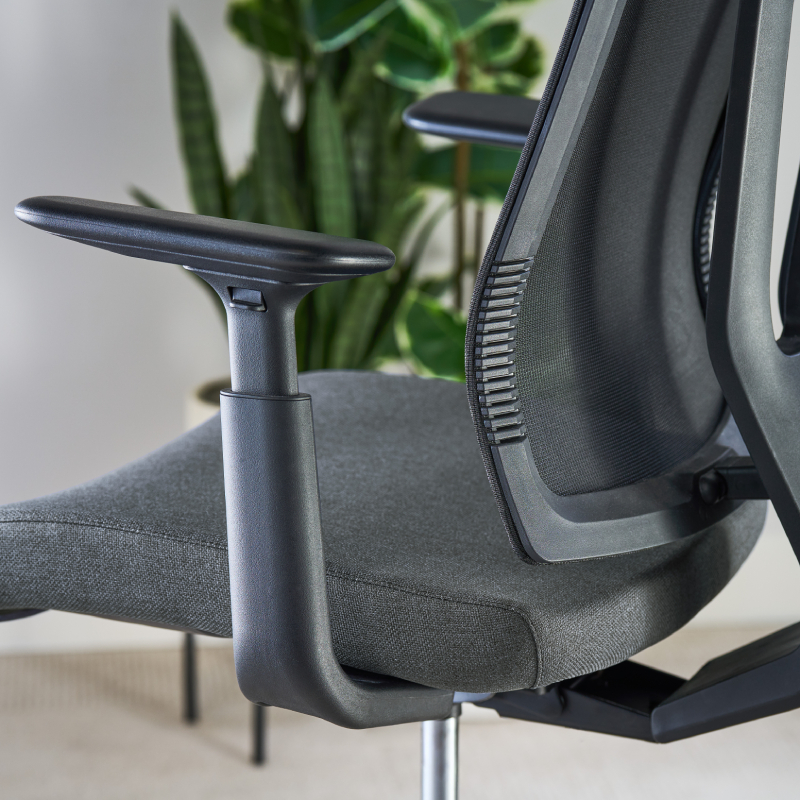
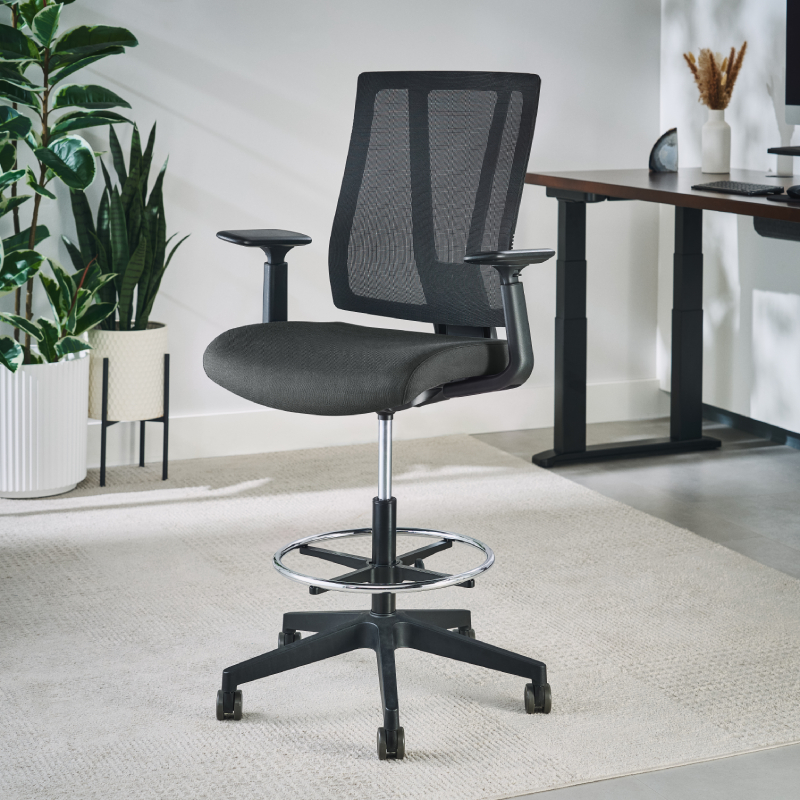
For professionals who spend their day at elevated work surfaces, the Clarksville Ergonomic Drafting Chair brings full ergonomic support up to standing height. It packs in a concealed four-position lumbar mechanism, breathable mesh back, three-way adjustable arms, and a 3" molded foam seat whose waterfall edge distributes weight evenly to ease pressure behind the knees—all built from commercial-grade materials, from the woven nylon mesh backrest to the polyurethane foam cushion.
The seat ranges from 24.5" to 32.5", making it a natural fit for standing desks, drafting tables, and counter-height surfaces. A non-slip foot ring further underscores its drafting chair characteristics, adjusting from 10" to 17" to match the user's preferred seat height. To stay stable at those heights, the chair holds an upright position with no recline, and the seat depth is fixed at 17.5".
The multi-adjustable armrests let users fine-tune the height, depth, and pivot angle to whatever they find most comfortable. The armrests are also removable, so the chair can go armless for preference or on a case-by-case basis. And the thick molded seat cushion offers consistent comfort throughout long working sessions.
Built for elevated work, the drafting chair doesn't compromise on style or durability. Having undergone rigorous testing, it meets ANSI/BIFMA X5.1-2017 requirements for safety and performance and is GSA compliant. It also keeps a streamlined silhouette, with a contoured back frame that flows with the curvature of the torso.
|
Height range Seat height adjusts from 24.5" to 32.5" |
Weight capacity 300 lbs |
|
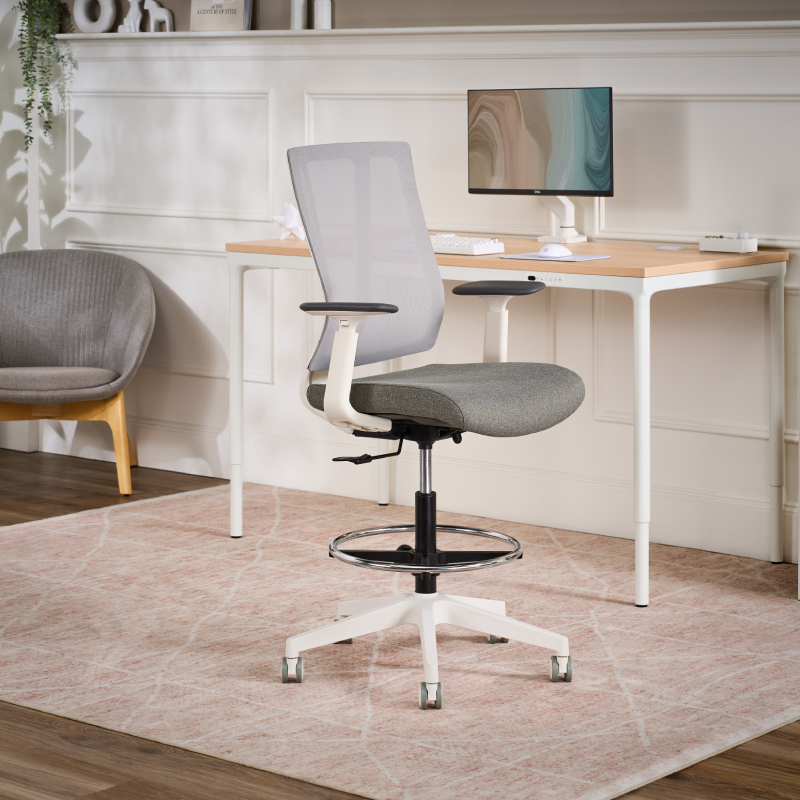
Colors Black and Fog |
Comfortable cushioning Durable, 3" thick molded foam seat cushion |
|
Height adjustable foot ring Independently adjusts from 10" to 17" |
Warranty 15-year warranty on all UPLIFT Desk products |
What differentiates drafting chairs from standard office chairs?
Standard office chairs and drafting chairs accommodate different types of workstations. Here's how they compare:
- Seat height: Conventional office chairs are intended for desks at seated height, with adjustable seat heights typically topping out in the low 20s. Drafting chairs provide much taller seating options for workers who operate at higher surfaces.
- Foot ring: Standard chairs don't come equipped with foot rings, since the user's feet rest on the floor at desk level. A drafting chair's foot ring gives the sitter's feet a sturdy place to rest when their desk is raised, or fixed, to standing height.
- Recline: Many standard task chairs recline. Drafting chairs often stay upright to remain stable at elevated seat heights.
When is a drafting chair right for you?
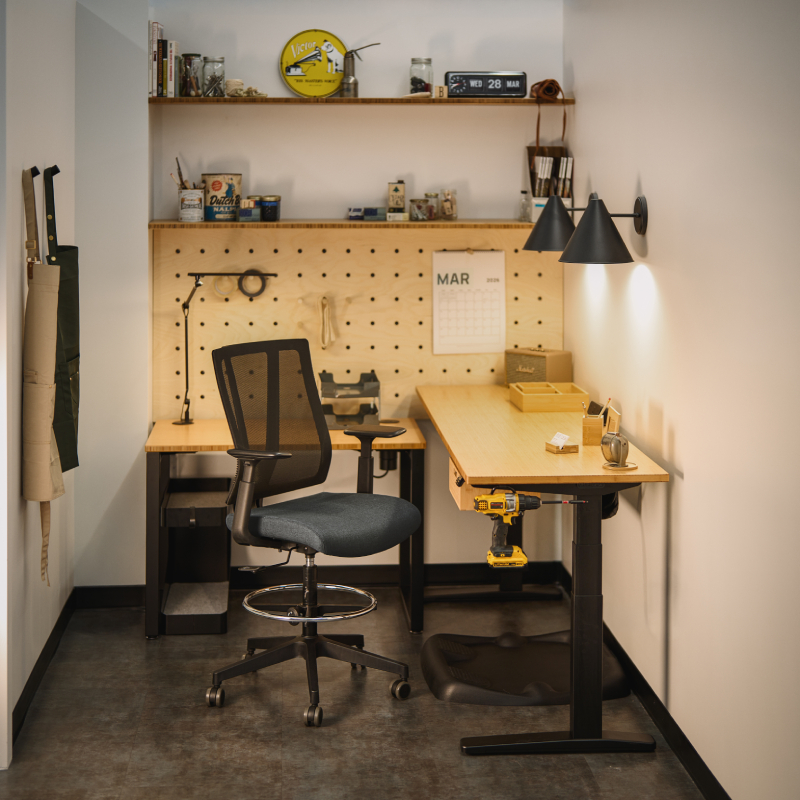
A drafting chair is worth considering if:
- Your work surface sits above conventional desk height (approximately 28 to 30"), like a drafting table, and you need a drafting table chair to match.
- You use a standing desk and want to shift between standing and perching without adjusting its height.
- Your tasks involve periodically leaning in to perform fine work or handle equipment, where a stable, elevated seat keeps you close to the task.
If you work mostly at a seated-height desk, a standard ergonomic office chair is the better choice.
Engineered for your workspace
Whether you sit, stand, or alternate between the two, the Clarksville Ergonomic Drafting Chair is engineered to make comfortably navigating your workspace as simple as possible. Choose from two colorways—Black and Fog—and enhance your space with a chair that suits the tasks you take on. To compare more elevated seating options, browse the full stools collection.
Shop the Clarksville Ergonomic Drafting Chair
Frequently asked questions
What's the difference between drafting chairs and drafting stools?
Drafting chairs and stools solve the same problem, yet stools have not historically been designed with ergonomics in mind. Drafting stools usually lack armrests and back support and offer few built-in adjustments, seldom providing the comfort and flexibility necessary for lengthy working sessions.
Can I use a drafting chair at a regular desk?
Usually not. Most standard desks sit 28 to 30" from the floor, and a drafting chair's lowest seat height puts you too high to work comfortably at that level. Drafting chairs fit best at standing desks raised to standing height, drafting tables, and counter-height surfaces. For a seated-height desk, a standard ergonomic office chair is the better match.
Does the Clarksville Ergonomic Drafting Chair recline?
No. The backrest holds a fixed upright position, and the chair has no tilt lock. Keeping the seat upright helps the chair stay stable at elevated heights.
Work better. Live healthier.