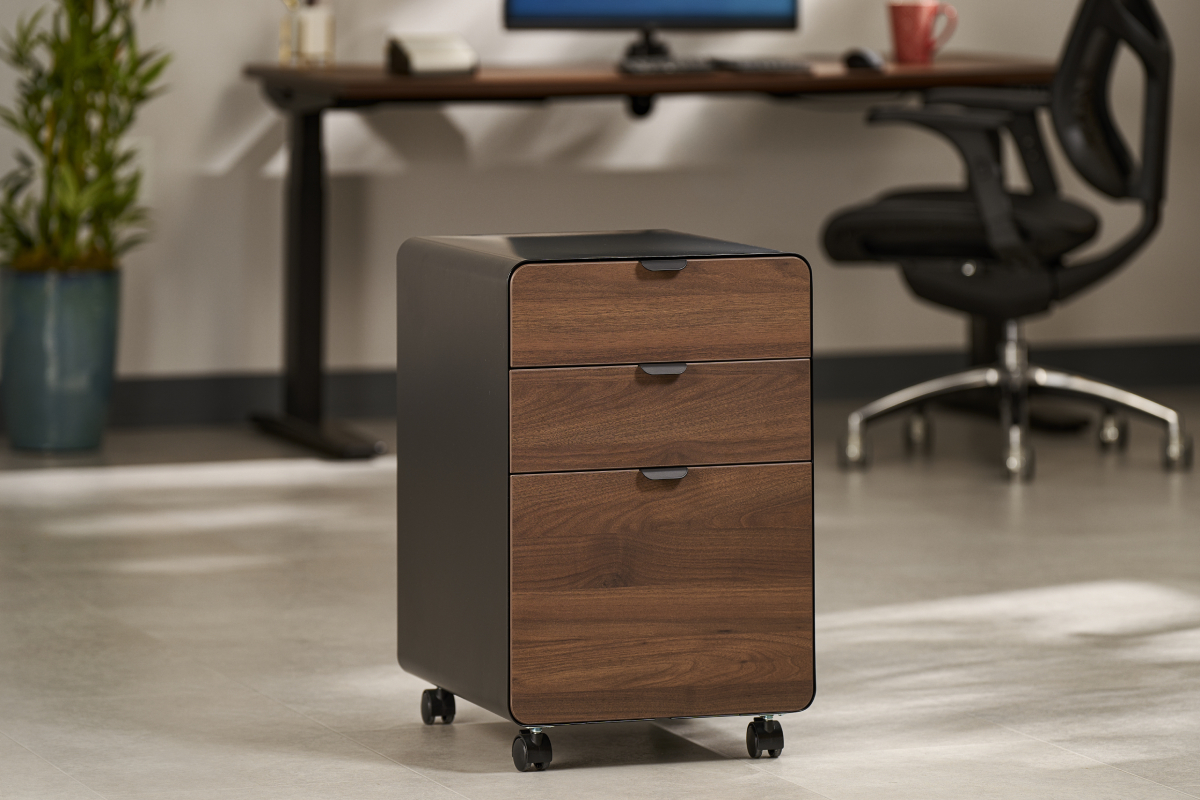
What to Look for When Buying a Filing Cabinet
A filing cabinet keeps documents, supplies, and personal items close at hand without cluttering your desktop. The right one depends on how much space you have, what you need to file, and how your workspace is set up. These are the features worth comparing before you buy.
Will it fit under your desk?
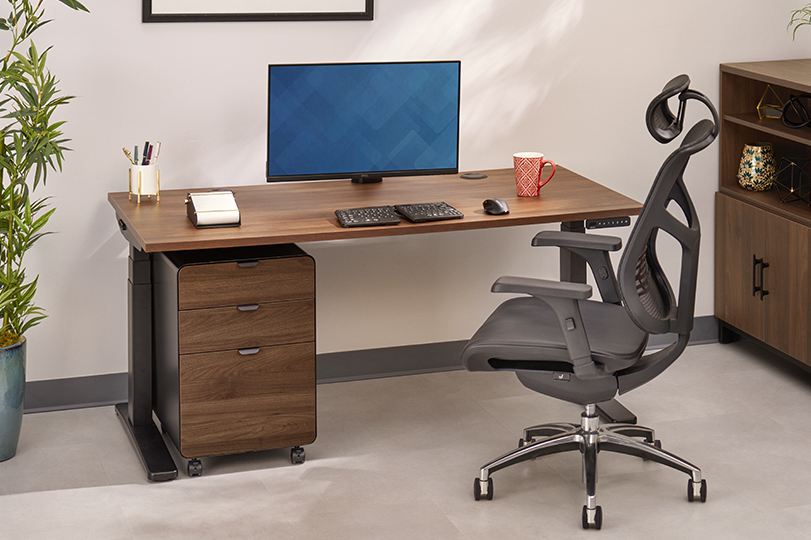
Start with the floor space where the cabinet will go. Most file cabinets stand 20 to 25 inches tall, below a typical seated desk height, so they tuck neatly under a standing desk. A height-adjustable desk also lets you set your sitting height wherever it's comfortable, with room for the cabinet underneath. If you use a keyboard tray or under-desk drawer, keep the cabinet beside it.
Width matters too. A narrow cabinet around 12 inches wide leaves more legroom beside your chair, while a 15- to 16-inch cabinet holds more.
What do you need to file?
Look for a drawer that holds hanging folders in the size you use. A movable hanging bar lets one drawer switch between letter- and legal-size folders. If you file a lot of paper, a three-drawer cabinet gives you room for folders plus supplies. If you mainly store personal items and a few documents, two drawers may be enough.
Do you need a lock?
A lock protects contracts, personnel records, and anything else you'd rather keep private, especially in a shared office. The most convenient design uses a single lock in the top drawer that secures every drawer at once.
Should it roll or stay put?
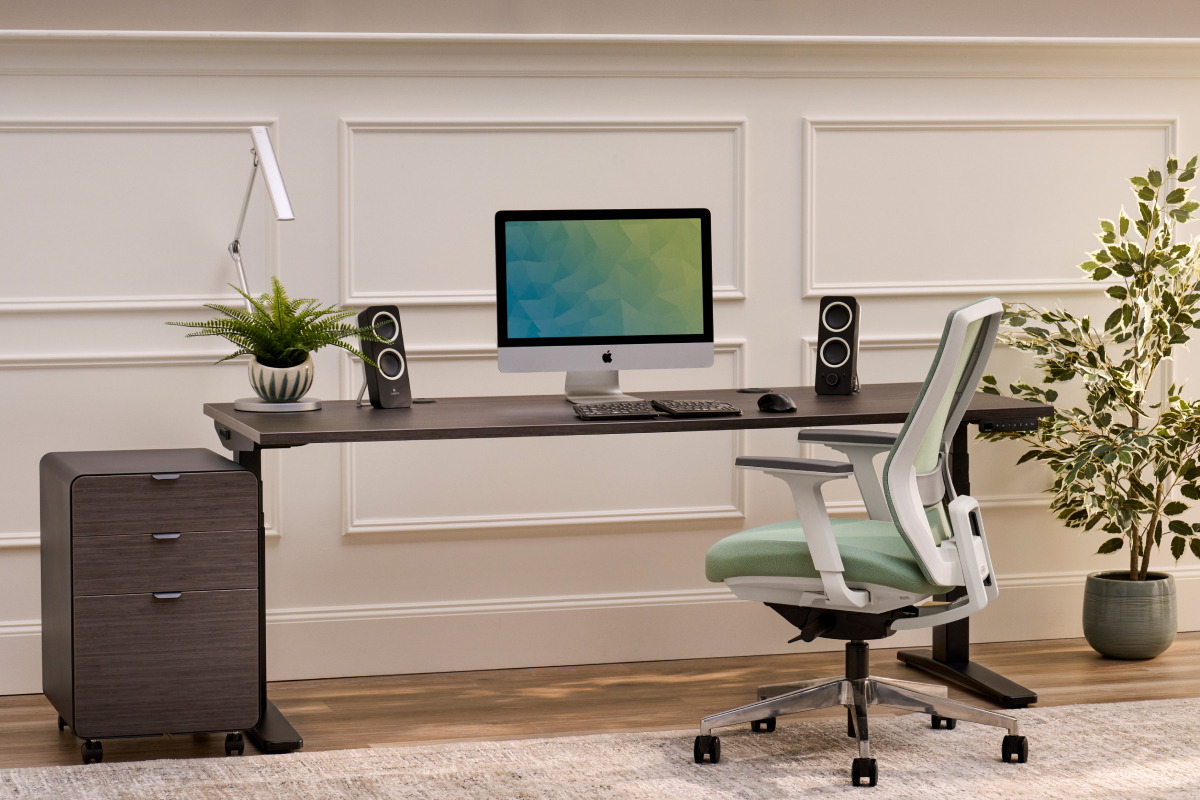
A mobile cabinet on casters moves wherever you need it: next to your chair while you work, or under the desk when you need legroom. Locking front casters hold it in place once it's positioned. For a stationary setup, leveling glides keep the cabinet from sliding on smooth, hard floors.
On a mobile cabinet, look for a support caster under the bottom drawer. It keeps the cabinet steady when a heavy drawer is fully open.
How will you organize the drawers?
- Full-extension glides. Drawers that open all the way give you access to everything at the back.
- Soft-close drawers. Soft-close slides prevent slamming and pinched fingers.
- Trays and dividers. A removable tray and drawer dividers keep pens, keys, and small supplies from sliding around.
Does it match your workspace?
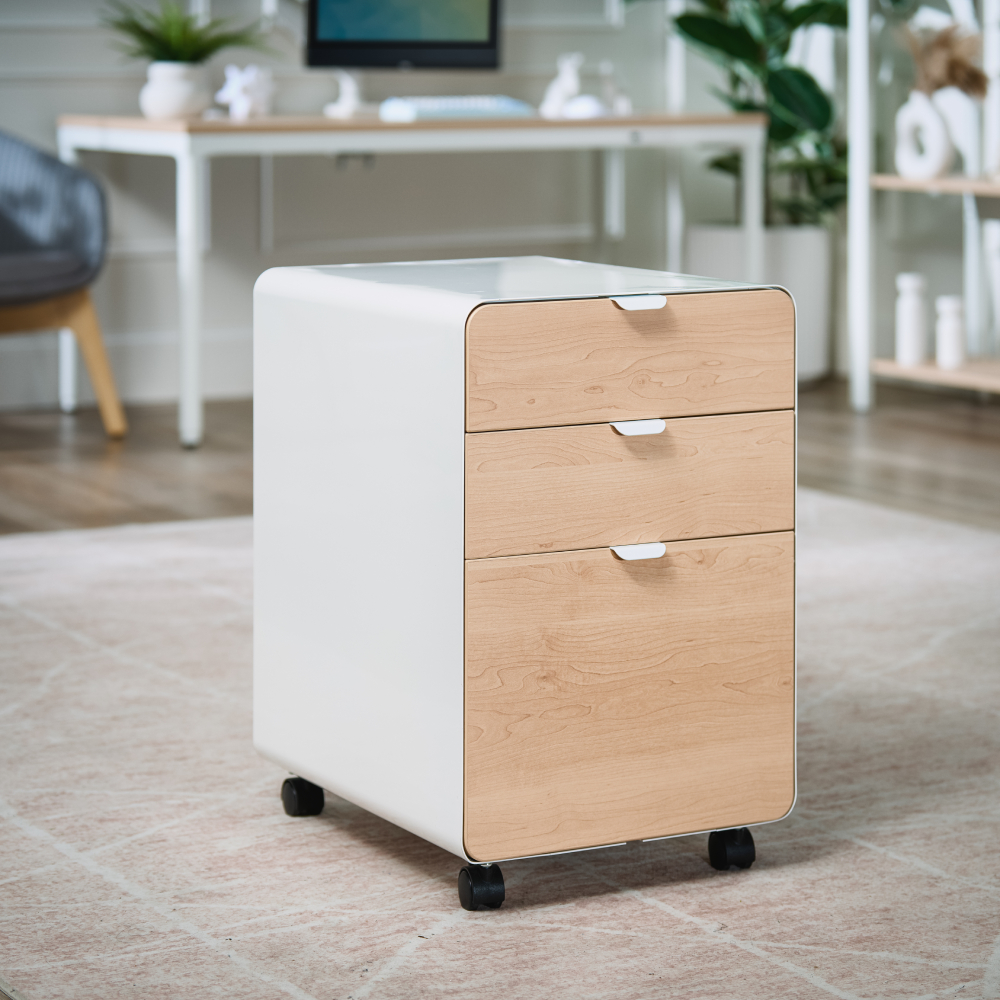
A filing cabinet sits in plain view, so the finish counts. Powder-coated steel holds up to daily use and wipes clean. Some cabinets also accept decorative drawer fronts in wood or laminate finishes that coordinate with your desktop. Decorative fronts can disable the drawer lock, so check before you choose them.
Can it do double duty?
A file cabinet with a padded seat on top gives visitors a place to sit without adding a chair. It works well in small offices and for quick one-on-one meetings at your desk.
Compare UPLIFT Desk file cabinets
Every cabinet below is made of steel, rolls on casters, locks all drawers from the top, holds letter- and legal-size hanging folders, and carries a 15-year warranty.
| File cabinet | Dimensions (W x D x H) | Drawers | Best for |
|---|---|---|---|
| 3-Drawer File Cabinet | 15.75 x 19.75 x 24.5 in | 3 | Maximum storage, with optional wood and laminate drawer fronts |
| 3-Drawer Square File Cabinet | 15.4 x 19.7 x 23.7 in | 3 | A clean, modern look with inlaid handles |
| 3-Drawer Narrow Square File Cabinet | 11.8 x 19.7 x 23.7 in | 3 | Small workspaces that need full filing storage |
| 2-Drawer File Cabinet with Seat | 15.75 x 19.7 x 19.75 in | 2 | Storage that doubles as guest seating |
| 2-Drawer Narrow File Cabinet with Seat | 11.8 x 19.7 x 19.75 in | 2 | Guest seating in a tight footprint |
Find the right file cabinet
Compare sizes, finishes, and features across the full collection of file cabinets.
Work better. Live healthier.