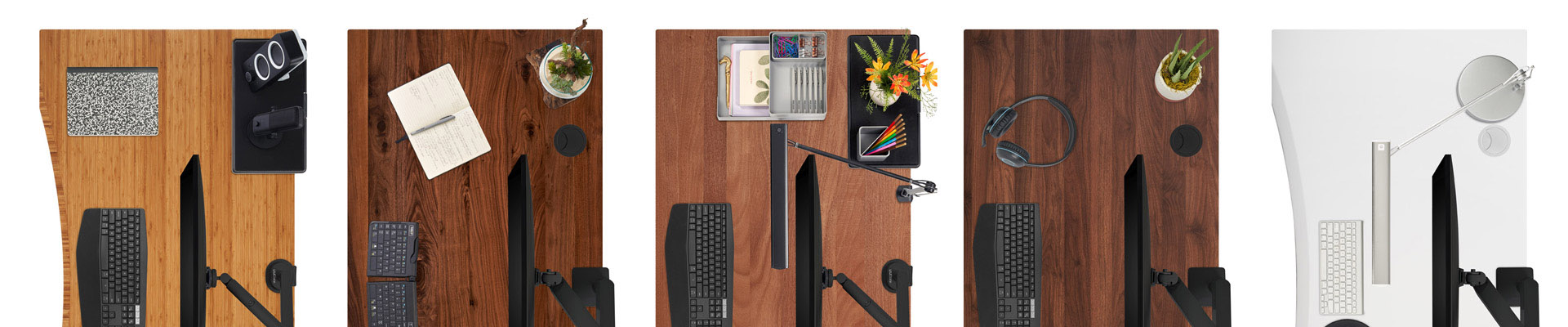
Proper care & use of your UPLIFT Desktop
With proper care and use, your desktop should provide you with years of beauty and service.
Cleaning Your Desktop
We recommend starting with a mild dish soap. Aggressive solvents and harsh scrubbing are not necessary and can cause more harm than good.
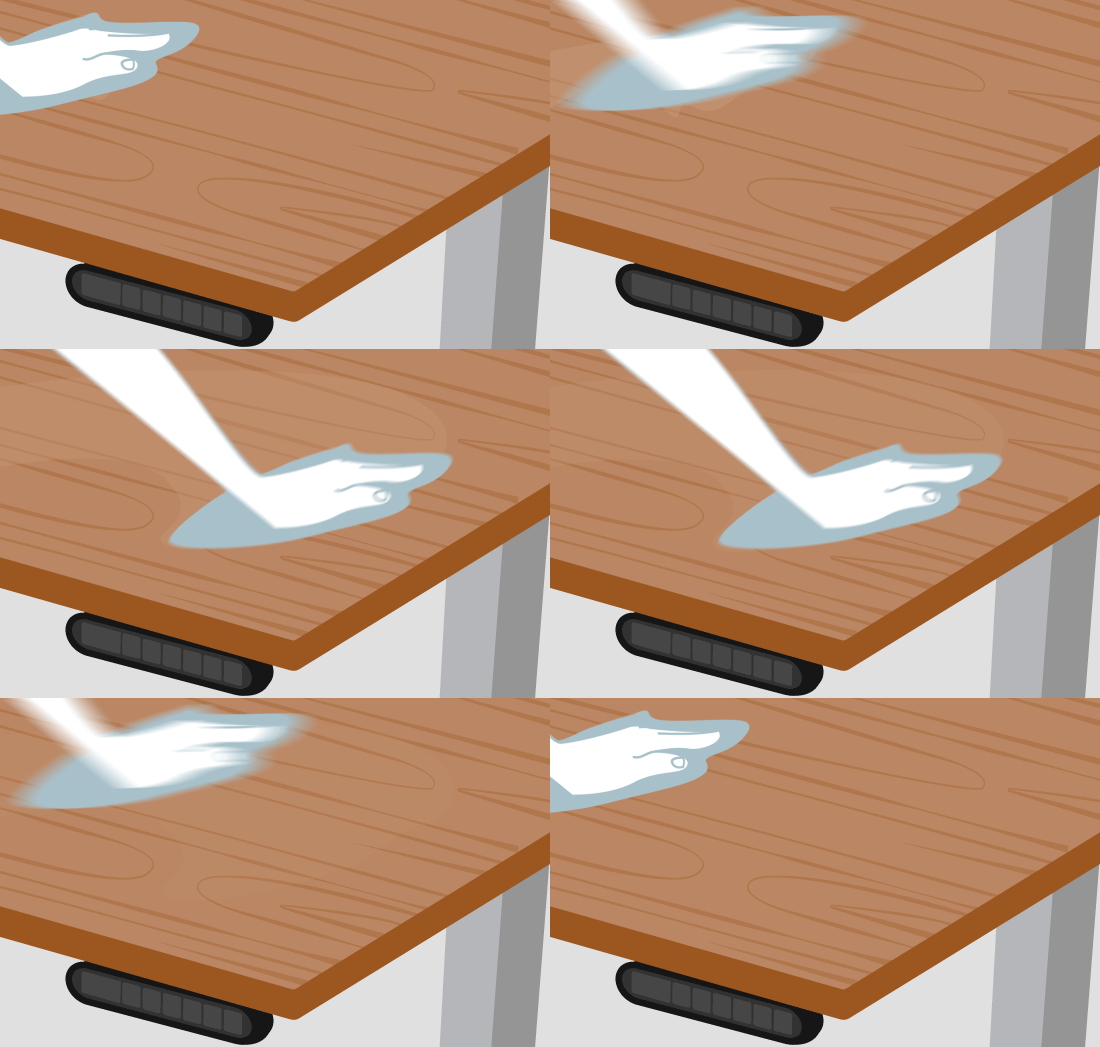
Start with dry dusting: A simple dusting with a dry cloth.
Introduce distilled water: For minor smudges or fingerprints, use a cloth lightly dampened with water.
Use a mild dish soap: For more stubborn grime, add a few drops of mild dish soap to a cup of water.
Avoid these harsh chemicals: Rubbing alcohol, bleach cleaners, acetone. We also don't recommend overly using house-hold cleaners like Windex and Mr. Clean.
For whiteboard desktops: Black dry erase markers tend to perform the best. To erase markings, simply use a dry erase eraser. To disinfect, use soapy water. To remove residue or marker ghosting left behind, use Expo White Board Cleaner. If there's still residue remaining, try 70% isopropyl alcohol. You can also write over the unerased portion with another dry erase marker, let it dry, and then erase it. Do not use Lysol wipes or Magic Eraser to clean your Whiteboard desktop as they can damage the surface.
Solid Wood Desktops
Preventing Scratches and Surface Wear
Desktop surfaces can be scratched by sharp or heavy objects.
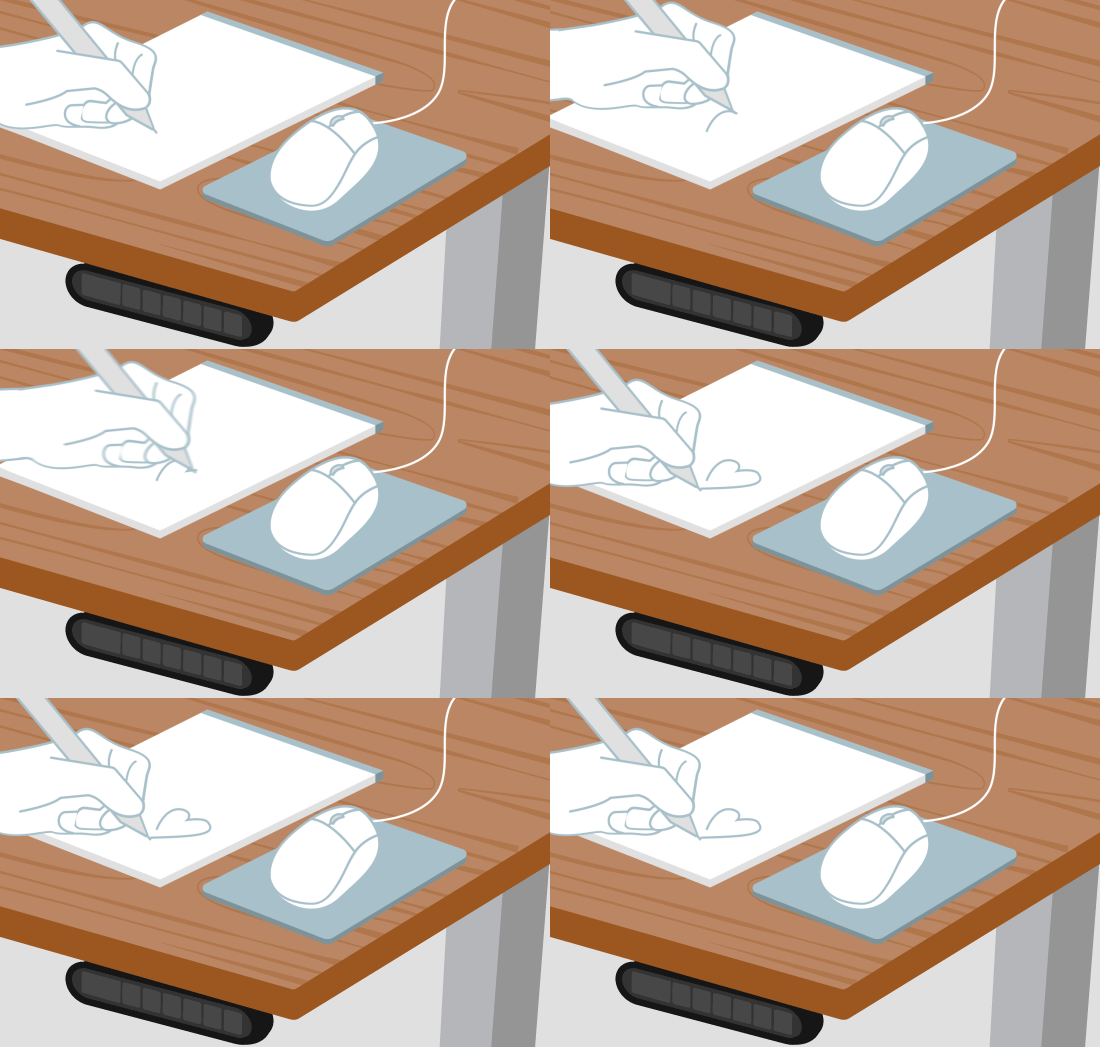
Use an UPLIFT Writing Desk Pad or notepad for writing.
Place felt pads under desk accessories, monitors, and equipment to prevent scratches.
Lift items when repositioning them rather than dragging them across the surface.
Gently place heavy objects onto the desktop surface.
Use a mouse pad. Repetitive mouse movement can gradually wear the finish, creating a shiny or discolored spot.
Caring for Your Solid Wood Desktop
Please don't use: Paint, stain or other lacquer products on your solid wood desktop.
Lemon oil use: Unlike raw, unsealed wood, your desktop is sealed which prevents full penetration of lemon oil. It will sit on top. Use it sparingly as a cleaner/polish, and wipe it off completely to avoid a greasy residue that attracts dust.
Most commercial "Lemon Oil" is actually just mineral oil with a lemon scent added. Pure lemon juice (citric acid) is acidic and can damage wood finishes over time. Mineral oil is inert and safe. Always check the label to ensure it is furniture-grade oil, not pure essential oil.
Exposure to direct sunlight: If locating your solid wood desk near a window with sun exposure, variations in wood color are likely to occur over time. Wood is a photosensitive material, meaning it reacts chemically to light, similarly to how human skin reacts to the sun. Most lighter woods and some medium-tone woods will darken, gaining a rich "patina" or amber tone over time. Darker woods are more prone to bleaching, where the UV light degrades the pigments faster than oxidation can darken them. Walnut desktops are the most notable exception to the "wood gets darker" rule, walnut starts as a deep chocolate brown and will fade to a lighter, golden-honey color if left in direct sunlight.
Managing sunlight exposure: If you leave a lamp or placemat in the same spot on a new table for months, you may notice a "shadow" underneath where the wood is a different color than the rest of the table. Move objects regularly for the first year. Avoiding sun exposure or using UV-blocking window films is the most effective way to slow this process.
How solid wood reacts to very dry climates (like Nevada, Utah, Wyoming, Arizona, New Mexico): Natural wood desktops adapt to your environment, expanding and contracting based on humidity levels. Very dry air can cause the wood to contract significantly enough to cause cracking. In particularly dry regions or heavily air conditioned office spaces that don't have humidity control, your solid wood desktop may need extra care to maintain its beauty. The key is moisture balance; a humidifier in the same room (especially one connected to your HVAC system) helps significantly. For best results, keep your desk away from direct sunlight and heating vents, as these can affect the wood's natural moisture content.
If you live in an especially dry climate and want a dry climate safe option, consider our Laminate or Eco desktops. Each offers enhanced stability in low-humidity environments. Should your desktop ever need attention, we provide professional touch-up kits and our support team is always ready to help with personalized recommendations for your specific situation.
Please contact us if you have additional questions.
Caring for Your Eco Curve Desktop
For Eco desktop materials, always use a coaster or dish under hot beverages or hot plates. Dry any liquids quickly and don't let them sit on the Eco top for long periods.