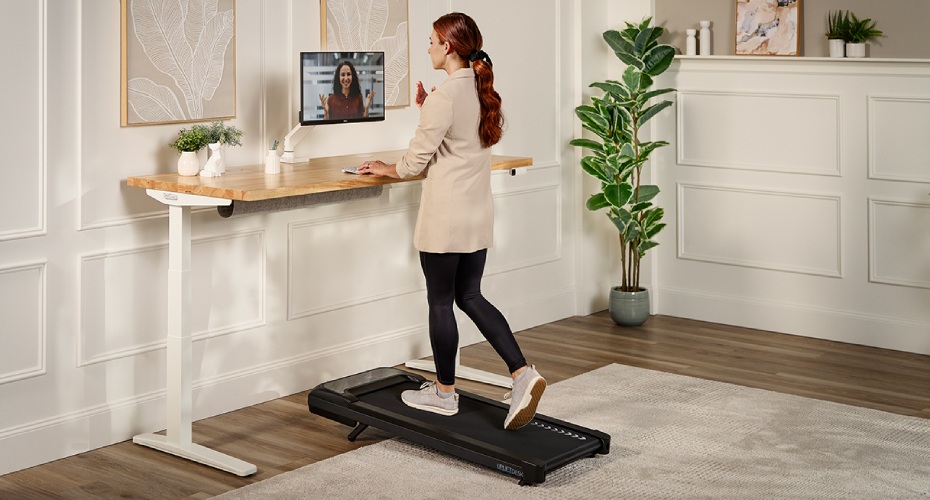
Walking Pads and Standing Desks: A Complete Guide
Sitting for eight hours a day is the reality for most of us who work at a desk, and the toll it takes is significant. Research has consistently linked prolonged sitting to cardiovascular disease, metabolic dysfunction, and increased mortality rates.2 Standing desks addressed part of this problem by giving workers the option to change positions throughout the day, but walking pads take that solution further by adding low-impact movement to the equation.
A walking pad is a compact, motorized treadmill designed specifically for use at a standing desk. Unlike traditional treadmills built for running workouts, walking pads operate at slower speeds (typically 1-4 mph) and feature a slimmer profile that fits beneath a desk. Instead of standing statically, you walk at a gentle pace while working — integrating movement directly into your day while still getting things done.
The health case for walking while working
The cardiovascular benefits of walking are well established. Regular walking improves circulation, strengthens the heart, and helps regulate blood pressure. When you walk at a desk, you're engaging in what researchers call non-exercise activity thermogenesis (NEAT), which contributes to daily calorie expenditure without requiring a formal workout.1
Beyond the physical benefits, walking affects cognitive function. Movement increases blood flow to the brain, which can improve focus and mental clarity. Many people report better concentration during phone calls or creative work when walking slowly compared to sitting or standing still.
The metabolic advantages are equally significant. Walking activates large muscle groups in the legs and core, which helps regulate blood sugar levels and prevents the metabolic slowdown associated with prolonged sitting. For people managing type 2 diabetes or cardiovascular risk factors, incorporating walking into the workday can make a measurable difference.
Mental health benefits shouldn't be overlooked either. Walking reduces stress, improves mood, and provides a subtle energy boost during the typical afternoon slump. The combination of movement and productivity creates a positive feedback loop that makes the workday feel less draining.
Combat the fatigue of a sedentary workday
Transform passive desk time into an active, health-conscious part of the day. The UPLIFT Walking Desk enables the seamless integration of low-impact movement, which is statistically shown to improve well-being and bolster mental clarity without sacrificing productivity.
Setting up your desk and walking pad system
The ergonomic relationship between your desk and walking pad determines whether this setup succeeds or becomes frustrating. Proper integration requires attention to height, positioning, and workflow.
|
Desk height When using the Inclining Walking Pad, you will likely need to adjust your height from the static standing position. Experiment during your first week to find what feels most comfortable, then lock it in with your keypad's memory preset. The goal is to maintain relaxed shoulders and a natural arm position while walking and working. |
Monitor positioning Your monitor should be at eye level to prevent neck strain. When walking, there's a tendency to look down at the keyboard or desk surface. Position your screen high enough that you maintain good posture naturally. An external monitor on an adjustable arm gives you the flexibility to optimize the viewing angle for both walking and standing. |
|
Keyboard and mouse Typing while walking takes practice. Start with tasks that require minimal keyboard input and gradually work up to more intensive typing sessions. A keyboard tray or negative-tilt setup can make typing more comfortable while walking, though this varies by individual preference. |
Placement and storage Look for a walking pad with integrated casters for easy repositioning. The ability to roll it into place when needed and store it when not in use makes the system more practical. A compact design that fits under a desk or against a wall reduces the footprint when you're sitting. |
UPLIFT standing desks pair naturally with walking pads because the desk's height range and stability accommodate the transitions between sitting, standing, and walking. The programmable memory settings let you save your preferred heights for each position, making switches seamless throughout the day.
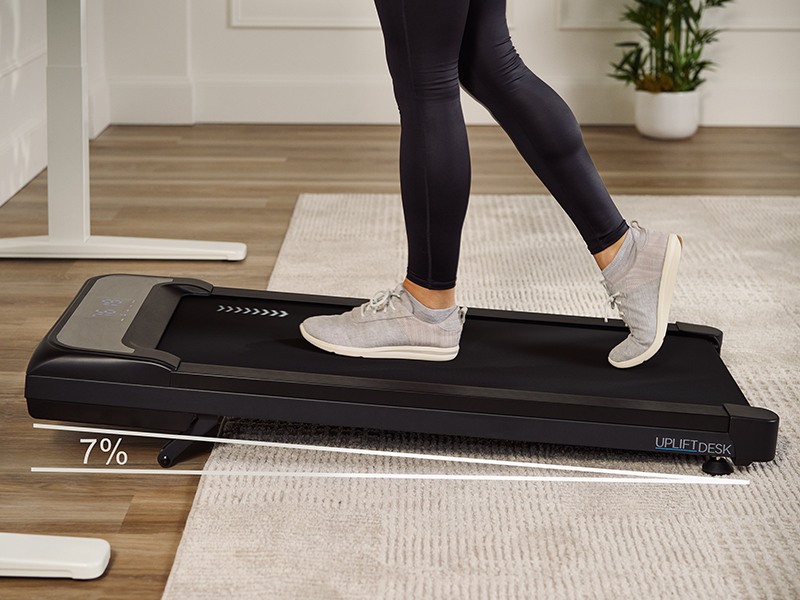
Choosing the right walking pad features
Not all walking pads are created equal. Certain features significantly impact the user experience and long-term satisfaction. Here's what to look for and how the UPLIFT Inclining Walking Pad delivers on each.
Ready to add movement to your workday?
Shop the Inclining Walking Pad by UPLIFT Desk
Common concerns and practical realities
"Won't walking distract me from my work?"
It's a fair concern, but the reality is that walking at 1.5-2 mph is slow enough that most people adapt within a few days. Tasks that don't require constant keyboard input work particularly well, and you may find that certain types of work — creative thinking, phone calls, reading — actually benefit from the gentle movement.
"I don't have space for more equipment"
Modern walking pads are designed to be compact and portable. Look for models that weigh under 50 pounds with integrated wheels for easy storage. A walking pad that can slide under a desk or fit against a wall when not in use solves the space problem for most home offices.
"Is this actually better than just taking a walk outside?"
Walking outside offers benefits that a walking pad can't replicate, particularly exposure to nature and varied terrain. However, a walking pad integrates movement into work time rather than requiring you to block off separate time for exercise. It's not meant to replace outdoor walking but to reduce sedentary time during work hours.
Making it work
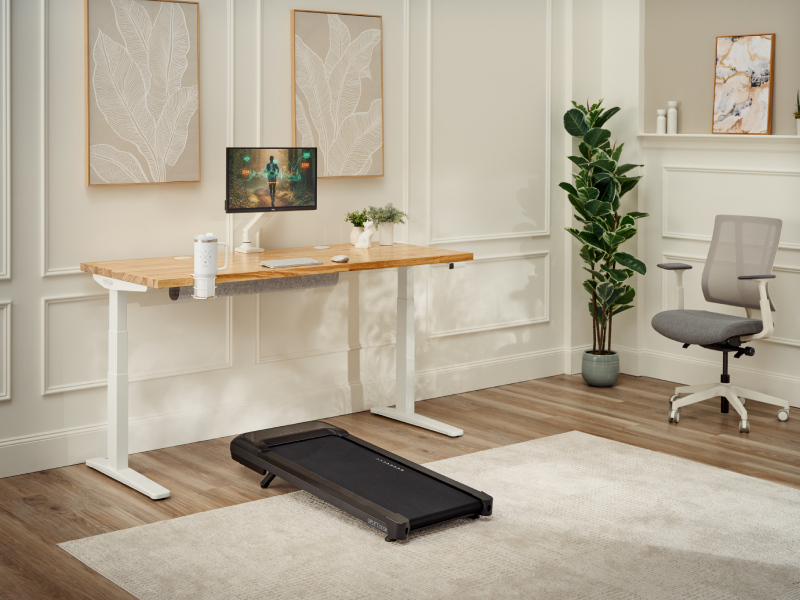
When your desk and walking pad are designed to work together, the system feels cohesive rather than cobbled together. The UPLIFT Walking Desk creates an integrated workspace where transitions between sitting, standing, and walking feel natural. The desk's programmable height presets eliminate the guesswork of finding your ideal walking height, while the walking pad's compact design complements the setup without dominating your floor space. And because the walking pad arrives fully assembled and ready to use, the barrier between buying it and actually using it is practically nonexistent.
Success comes from approaching this as a gradual adjustment rather than a dramatic change. Start with short sessions and give yourself time to adjust. Once the routine feels natural, the health, productivity, and mental benefits aren't far behind.
Sources
1 Levine JA. Non-exercise activity thermogenesis (NEAT). Best Pract Res Clin Endocrinol Metab. 2002 Dec;16(4):679-702. doi: 10.1053/beem.2002.0227. PMID: 12468415. https://pubmed.ncbi.nlm.nih.gov/12468415/
2 Park JH, Moon JH, Kim HJ, Kong MH, Oh RH. Sedentarism and Chronic Health Problems. Korean J Fam Med. 2024;45(5):239-257. doi:10.4082/kjfm.24.0099. https://pmc.ncbi.nlm.nih.gov/articles/PMC11427223/
Work better. Live healthier.