The steps you're missing: How to move more without leaving your desk
The average American office worker takes fewer than 4,000 steps per day. Research suggests 7,000-8,000 steps daily delivers meaningful cardiovascular and metabolic benefits. That leaves a gap of 3,000-4,000 steps that most desk workers simply aren't getting.
Over a year, that gap compounds. Missing 4,000 steps daily equals 1.46 million steps annually, roughly 730 miles of walking that never happens. The costs show up as increased cardiovascular risk, weight gain, metabolic dysfunction, and reduced energy.
The standard advice is to "walk more," but that ignores the reality of desk work. You can't add two hours of outdoor walking to a day already packed with meetings, deadlines, and everything else competing for time. The solution isn't finding more time. It's using work time differently.
The average desk worker gets just 1,200 steps during an 8-hour workday.
That's where the gap lives—and where the solution is.
The case for integrated movement
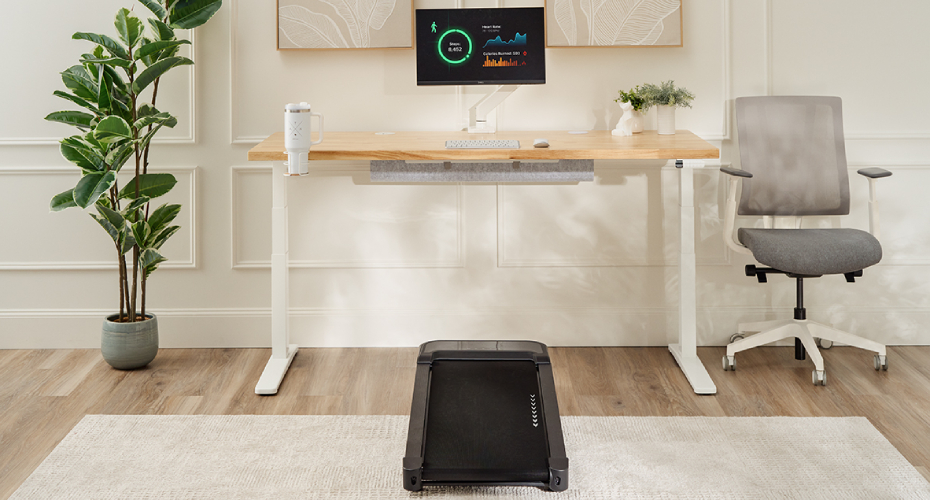
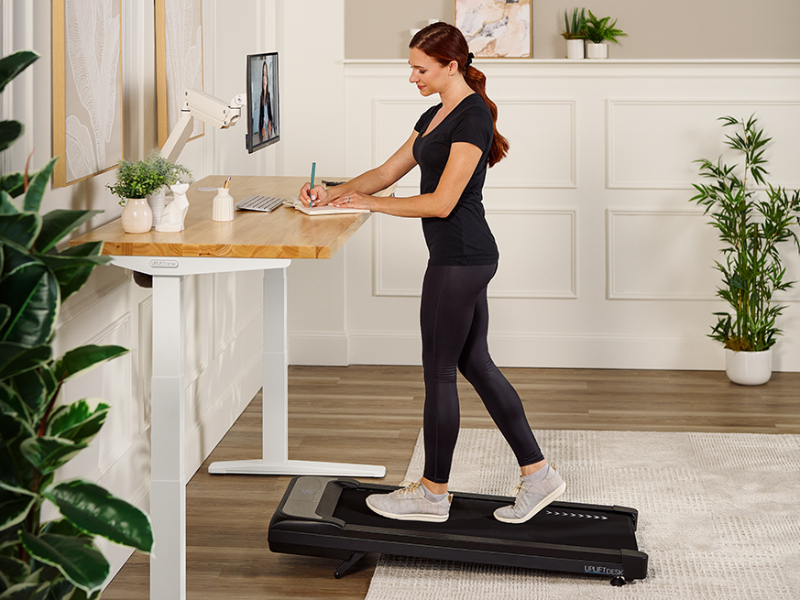
The most sustainable way to reclaim missing steps is to integrate walking directly into work time. Walking at a standing desk eliminates the barriers that derail traditional exercise: no commute to a gym, no weather concerns, no need to change clothes or block off separate time.
This converts sedentary work time into active work time. Steps accumulate as a byproduct of tasks you're already doing. Phone calls, reading, reviewing content, and creative thinking all work well while walking at a gentle pace. For setup details and best practices, see our complete guide to walking pads and standing desks.
The mathematics of step recovery
Recovering a 4,000-step deficit requires approximately 35-40 minutes of walking at a moderate pace. Walking at 2 mph generates roughly 4,000 steps per hour. Two or three sessions spread across a workday recovers the gap comfortably.
These sessions don't need to be continuous. Walking for 15-20 minutes in the late morning, another 15-20 minutes in the early afternoon, and a final 10 minutes later creates multiple opportunities to accumulate steps while breaking up sedentary time.
Building toward 8,000 steps
Building from a 4,000-step baseline to an 8,000-step target requires gradual progression. Attempting to double your daily steps immediately rarely succeeds. The body needs time to adapt, and the habit needs time to become sustainable.
Some people progress faster. Others need more time at each stage. The specific timeline matters less than the principle of gradual, sustainable increases.
Practical implementation strategies
|
Match walking to work tasks Phone calls and video meetings (camera off) work exceptionally well while walking. Reading and reviewing content are highly compatible. Complex spreadsheet work may be more challenging initially. Identify 2-3 task types that work while walking and schedule those during your sessions. |
Use natural transition points Schedule walking sessions around existing breaks. Walk during transitions between meetings, while listening to recorded webinars, or during the first 15 minutes of lunch. These transition points make walking feel like part of your routine rather than an interruption. |
|
Adjust for energy and workload Walking sessions should adapt to your energy level. On high-energy days, walk more. On low-energy days or during intensive project work, walk less. This flexibility prevents the routine from becoming rigid and unsustainable over time. |
Track without obsessing Monitoring step count helps maintain awareness, but obsessive tracking creates stress. Check your steps once or twice daily and focus on weekly averages rather than daily perfection. The trend matters more than individual days. |
The UPLIFT Inclining Walking Pad
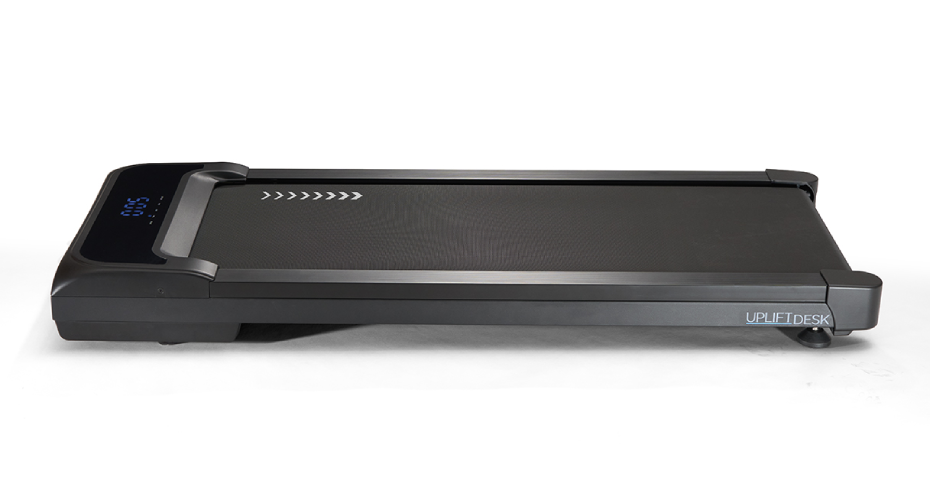
Designed to pair with UPLIFT standing desks, the Inclining Walking Pad features motorized incline up to 7%, a compact footprint, and a quiet motor that won't disrupt calls or concentration. It arrives fully assembled and ready to use.
What recovery actually looks like
Recovering your step deficit means consistently achieving 7,000-8,000 steps most days, roughly double the typical desk worker baseline.
Research shows the largest reductions in mortality risk occur when moving from highly sedentary (under 4,000 steps) to moderately active (7,000-8,000 steps). Additional steps provide incremental benefits, but the major health gains happen in that range.
The goal isn't perfection. It's consistent improvement over time.
The compounding effect
Consistent movement throughout the workday affects energy levels, often leading to more evening activity. Mental clarity improves. Mood regulation gets better. Stress decreases. These secondary benefits reinforce the behavior.
Over months and years, a 4,000-step daily increase translates to approximately 1.46 million additional steps annually, 730 miles of movement that affects cardiovascular health, weight management, and metabolic function.
Making it sustainable
The difference between temporary step increases and lasting change comes down to sustainability. A routine that requires constant willpower eventually fails. A routine that integrates with work patterns persists.
Start small. Build gradually. Find the implementation that fits your work style. The steps you're missing aren't hiding in some distant time slot. They're sitting in the hours you're already at a desk. Walking while working transforms time you're already using into something more valuable.
Work better. Live healthier.